
 1K
1K


Who Dies Last - Physics-Based Tactical Puzzle Sandbox
What is Who Dies Last?
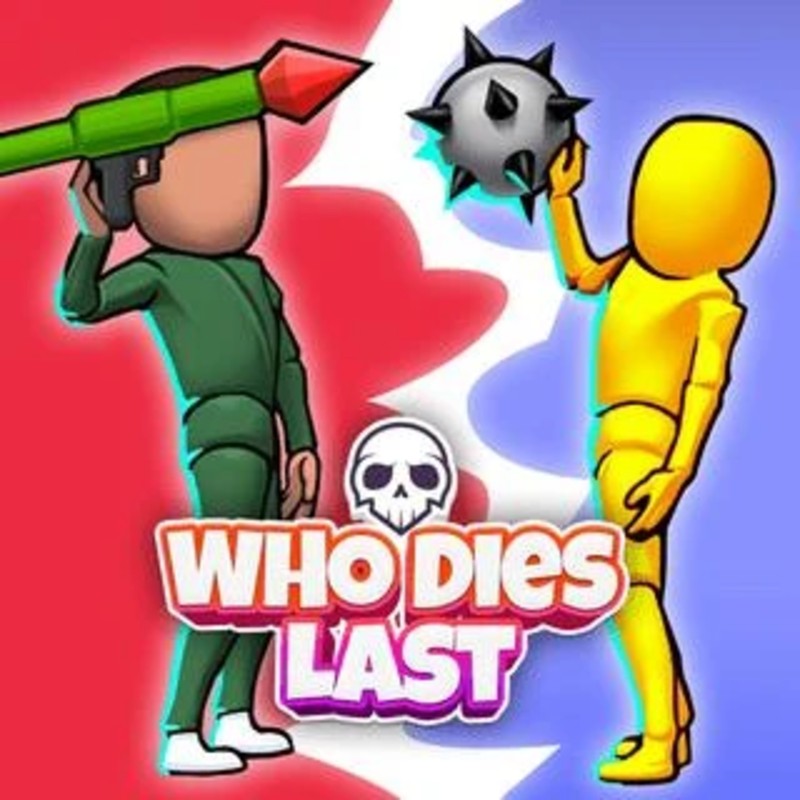
Who Dies Last is a high-stakes, competitive physics-based puzzle and strategy game where survival is entirely a game of structural angles and environmental awareness. Hosted on the Decent Games platform, the premise drops you and an opponent into a highly volatile arena packed with triggered traps, suspended TNT clusters, and shifting gravity weights. Rather than focusing purely on direct combat, your objective is to strategically manipulate the architecture of the arena, forcing the environment to crush, blast, or trap your opponent while you systematically secure the safest structural pocket to ensure you are the last soul standing.
🎮 Gameplay Overview
-
Chain-Reaction Environments: Every block, crate, and explosive in the arena possesses distinct mass and friction values. Slicing a single support line or igniting a baseline bomb can trigger a massive, unpredictable kinetic domino effect across the map.
-
Turn-Based Tactical Forecasting: Matches demand a deep calculation of cause and effect. Players alternate utilizing their tool arsenal, turning the layout into a high-stakes chess match where a single misaimed shot can bounce back and trigger your own elimination.
-
Community Sandbox Hub: The 2026 build integrates a comprehensive level-editing dashboard. The "Creative Chaos" engine update allows the global player base to construct, test, and publish custom physics puzzles directly to the community leaderboard stream.
🕹️ Controls & Navigation
| Action | Desktop (Mouse / Keyboard) | Functional Operational Summary |
| Aim Trajectory | Mouse Movement | Pivot your crosshair to map out the exact geometric arc of your next project or tool drop. |
| Fire / Interact | Left Click | Discharge your active bow, release a heavy weight, hurl an explosive, or flip a distant structural lever. |
| Cycle Toolkit | 1, 2, 3 or Mouse Wheel | Instantly swap between your active inventory tools, switching fluidly from precision Arrows to heavy weights and TNT. |
| Instant Reset | R Key | Instantly wipe the current layout configuration and restart the puzzle if you accidentally trap your own character. |
💡 Survival Tactics
-
Enforce the "Wait and See" Meta: Resist the urge to aggressively fire off your highest-impact explosives on the very first turn. Initiating a sequence early frequently exposes your own cover blocks to retaliatory shrapnel. Let your opponent take the initial shot; monitoring how their projectile alters the map layout often exposes hidden weaknesses in their own defenses that you can exploit on your turn.
-
Prioritize Structural Levers over Raw Force: Do not waste your premium high-damage TNT ammo attempting to blast through reinforced stone blockades. Instead, use your precision arrows to target small, fragile wooden support beams or exposed tension ropes. Collapsing a tiny wooden peg can drop tons of neutral environmental debris directly onto your rival's position for free, saving your explosives for late-game tiebreakers.
-
Calculate Shrapnel Chain Reactions: When deploying your explosive payloads, look beyond the primary blast radius. The 2026 physics overhaul introduces realistic kinetic shrapnel paths. Aiming a bomb to detonate inside a tight geometric pocket or between dense metallic objects forces fragmented debris to bounce at sharp, predictable angles, allowing you to bypass flat shields to strike opponents tucked deeply behind hard cover.
-
Audit Your Overhead Alignment First: The most common rookie blunder is focusing so intently on an opponent's layout that you fail to assess your own surroundings. Before confirming any shot trajectory, thoroughly audit the vertical space directly above your own character's head asset. Ensure that the kinetic shockwave of your incoming arrow or bomb will not inadvertently shake loose a hanging icicle, stone weight, or spike strip positioned right above you.
🌍 Unblocked & Device Compatibility
Play Who Dies Last unblocked securely at work or school via Decent Games. Engineered using an optimized HTML5 matrix and responsive WebGL physics engines, the game processes multiple independent mass trajectories, fluid box physics, and material-specific collision vectors cleanly at a stable 60FPS. The lightweight web wrapper easily clears strict educational and corporate local network firewalls, serving up frame-perfect puzzle matchmaking directly inside standard modern web browsers on Chromebooks, portable laptops, and desktop computer rigs with zero software installations required.
![[GAMENAME]](/[BGIMGURL])
 [RATE]