
 1K
1K




Proximity City - Minimalist Urbanism & Spatial Logic Puzzle Sandbox
What is Proximity City?
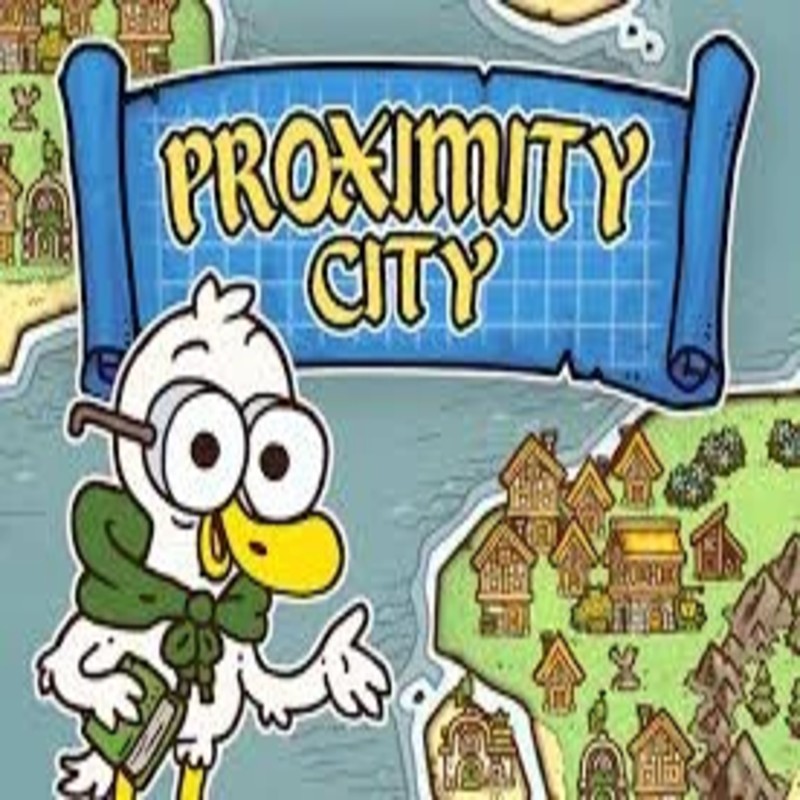
Proximity City is a revolutionary, logic-driven city builder and spatial puzzle game that challenges your understanding of minimalist urban planning and macroeconomic layout design. Shifting away from traditional sandbox city-builders characterized by infinite land reserves, this title binds players to micro-grids where every structure must adhere to strict "15-minute city" parameters. Hosted on the Decent Games portal, your objective is to maximize societal happiness and tax yields by meticulously balancing residential density, commercial access, and industrial buffers within compressed, high-efficiency sectors.
🎮 Gameplay Overview
-
Constraint-Based Urban Planning: Placing structures triggers overlapping proximity evaluations. The city grid thrives only when residential quarters are constructed within tight radius steps of essential services, simulating real-world pedestrian accessibility.
-
Smart-Grid Overlay & Influence Heatmaps: The 2026 vector engine includes advanced, real-time diagnostic visual arrays. Activating your structural mapping tool projects dynamic land-value gradients and zone influence heatmaps, allowing you to mathematically audit a building's systemic impact before committing to a tile drop.
-
Vertical Up-Zoning Mechanics: Horizontal space functions as a strictly finite, premium resource. When baseline land lots choke out, players must shift to vertical integration—deploying high-rise development modifications to stack population densities upward without expanding their horizontal footprint.
-
Eco-Stability Mode Ecosystem: The simulation tracks localized pollution and environmental degradation. Industrial components generate massive currency yields but degrade the land value of flanking sectors, requiring you to engineer complex green-belt buffers to stabilize regional ecology.
🕹️ Official Control Guide (Browser & Desktop)
| Action Matrix | Desktop (PC / Keyboard) | Operational Tactical Planning Focus |
| Place Building / Zone | Mouse Left Click | Drop your selected structure module directly onto an active grid cell. |
| Rotate Module Angle | R Key / Spacebar | Orient structural access points to optimize proximity connection chains. |
| Cycle Structure Type | 1 - 3 Keys / Mouse Scroll | Switch your active deployment brush between Housing (1), Parks (2), and Shops (3). |
| Undo Last Placement | Ctrl + Z | Instantly reverse a zoning configuration to fix a proximity violation. |
| Toggle Diagnostic View | H Key | Project active zone influence heatmaps to locate isolated or under-serviced sectors. |
| System Ledger Hub | Esc Key | Pause the timeline to evaluate population targets and core macroeconomic charts. |
💡 Urban Architect Tactics: Winning Strategies
Enforce the Tight 3-Block Cluster Radius 🕒
In Proximity City, structural output drops off aggressively if citizens are forced to travel across vast distances. Residential units calculate a strict drop-off in happiness metrics if they sit more than 3 blocks away from a commercial shop or recreational park asset. Avoid building monolithic, single-zone suburbs. Instead, deploy your modules in tight, self-sustaining hexagonal or cross-shaped micro-clusters, guaranteeing every single apartment complex is directly anchored to an essential resource node.
Insulate Living Sectors with Green Belt Buffers 🏭
Industrial facilities are your primary engine for corporate tax revenue, but their localized pollution output drastically tanks the land value and stability indices of surrounding tiles. Never drop a factory block directly adjacent to high-density residential grids. Meticulously position Green Belts (Parks) to act as physical insulation buffers. Nestling a strip of parklands between your industrial zones and residential districts dampens the environmental penalty, keeping your tax flow high while protecting citizens' health parameters.
Maximize Footprint Efficiency via Vertical Up-Zoning 🏗️
The moment your baseline map boundaries hit horizontal saturation, do not attempt to clear outer terrain patches at high credit costs. Audit your existing grid for high-value residential blocks. Select your housing tool and deploy an Up-Zoning modification directly on top of established low-profile apartments. Upgrading existing assets into High-Rises doubles your localized population density within the exact same single-tile footprint, optimizing your real estate efficiency on cramped layouts.
Construct Linear Shopping Districts for Chain Multipliers 🔗
Structural assets in this simulation are reactive to their immediate neighbors. Placing individual commercial modules apart from each other yields baseline retail sales. However, aligning three commercial zones in a continuous, unbroken line alters their structural attributes, automatically morphing the asset layout into a specialized Shopping District. This structural transformation exponentially expands the commercial zone's proximity reach across the map, pulling in tax revenues from residential quarters located far beyond the standard 3-block limit.
🌍 Preservation & Device Compatibility
Play Proximity City unblocked securely at work or school via verified Decent Games preservation portals. Built on an optimized vector asset engine utilizing low-latency HTML5 framework variables and responsive WebGL rendering scripts, the platform handles massive scaling layouts, real-time heatmap overlays, and material-specific chiptune sound configurations cleanly at a stable 60FPS. The lightweight web wrapper easily clears strict educational and corporate firewalls, rendering frame-perfect strategy simulation directly inside modern internet browser tabs across Chromebooks, portable laptops, and desktop computers with no external client installations required.
![[GAMENAME]](/[BGIMGURL])
 [RATE]